



Popular Installation Services
Luxury Vinyl Plank and Tile
Commercial LVT That Does More Than Look the Part
Few commercial flooring categories offer the combination of design versatility and practical performance found in Luxury Vinyl Tile and Luxury Vinyl Plank.
Today's LVT can recreate wood, stone, concrete, terrazzo, textile, and abstract visuals in formats ranging from traditional planks and tiles to oversized shapes and coordinated modular designs.
But commercial LVT is about much more than appearance.
Product thickness, wear layer, construction, finish, installation method, dimensional stability, maintenance requirements, substrate conditions, and the demands of the space all matter.
At Commercial Flooring Services, we help general contractors, architects, designers, facility teams, and owners look beyond the sample and understand what they're actually specifying or purchasing.
Because two LVT products can look remarkably similar - and be built for very different applications.

"We are often the last ones in. Thus, we are invested in every other stakeholder's success on the project."
- Grant Petruzzelli, President
Commercial Luxury Vinyl Flooring
Design Flexibility Meets Commercial Performance
LVT has changed the way commercial interiors are designed.
Realistic visuals and sophisticated manufacturing technologies give designers tremendous freedom to create the warmth of wood, character of stone, movement of terrazzo, or something entirely different - without being limited to the natural material being represented.
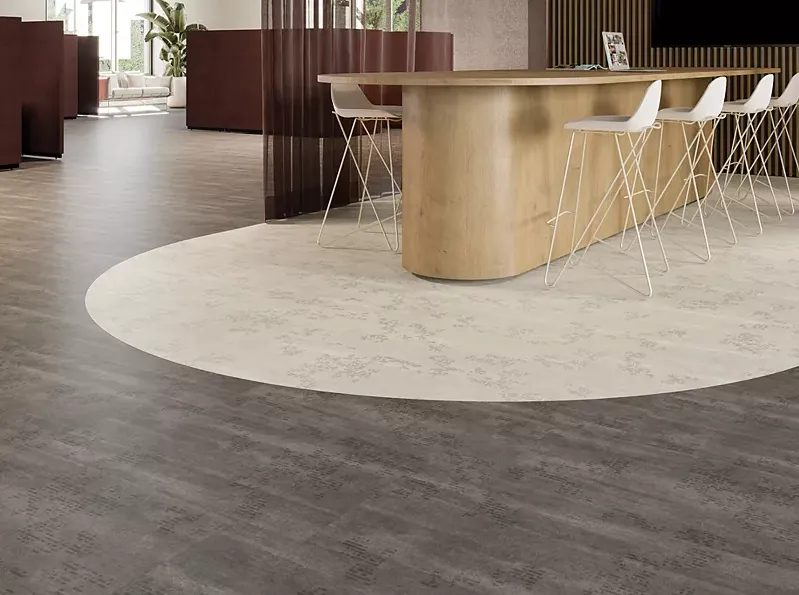
The modular format also makes it possible to combine colors, sizes, patterns, and even flooring categories within a coordinated interior.
CFS provides commercial LVT and LVP solutions for:
• Corporate
• Education
• Healthcare
• Retail
• Hospitality
• Worship
• Multifamily
• Government
• Civic & Institutional Environments
But selecting LVT shouldn't begin and end with a visual. The better question is:
What does this floor need to do?
Popular LVP / LVT Options:
Wood-Look Luxury Vinyl Plank
The warmth of wood with commercial flooring versatility.
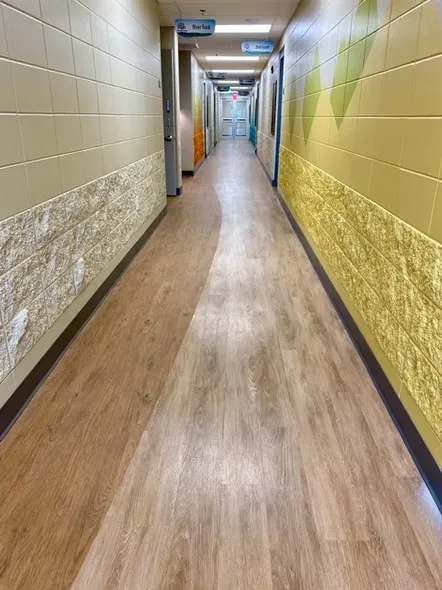
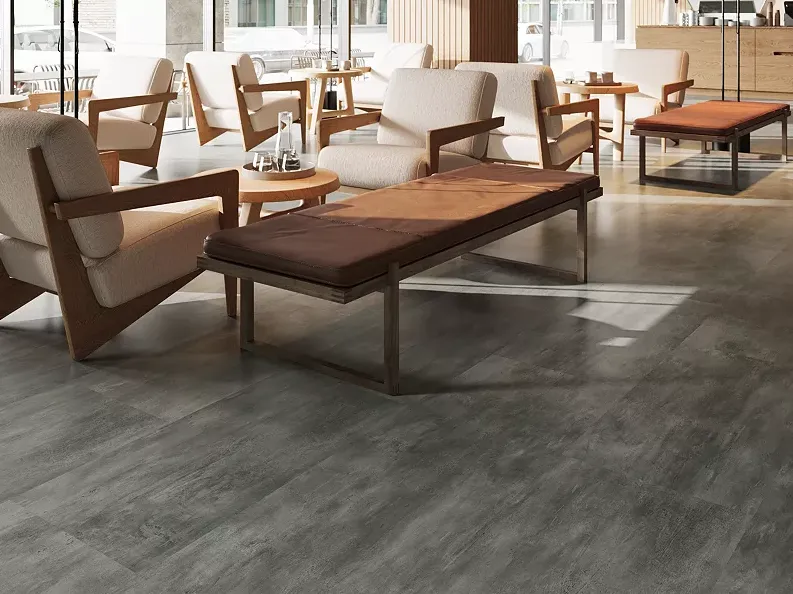
Wood visuals remain one of the most widely specified forms of LVT because they can introduce warmth and natural character into commercial interiors without requiring the project to use natural hardwood.
Available visuals range from clean contemporary grains to reclaimed, rustic, European, and highly varied wood interpretations.
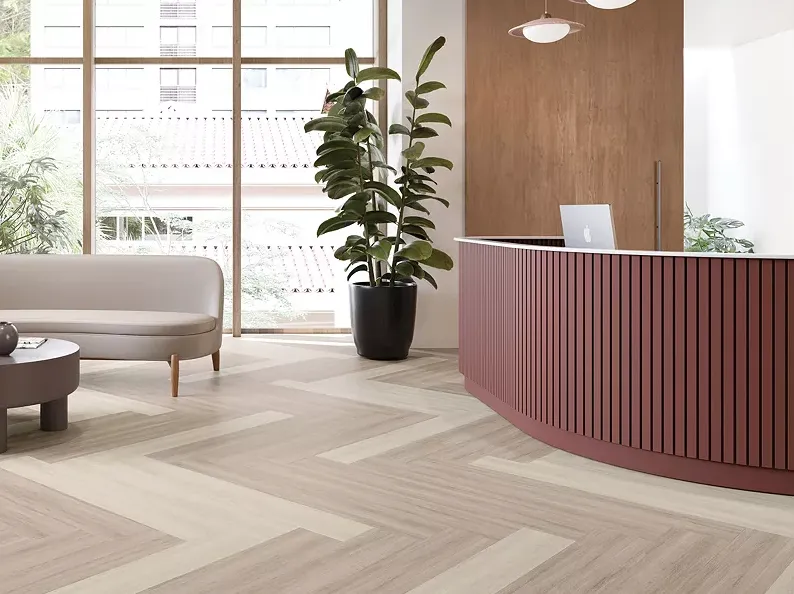
Plank dimensions, bevels, embossing, pattern variation, color range, and installation direction can significantly change the finished appearance.
The result can feel traditional, contemporary, hospitality-driven, residentially influenced, or distinctly architectural.
The plank may be modular. The finished design doesn't have to look that way.
Stone, Concrete & Terrazzo LVT Visuals
Hard-surface aesthetics without being limited to natural materials.
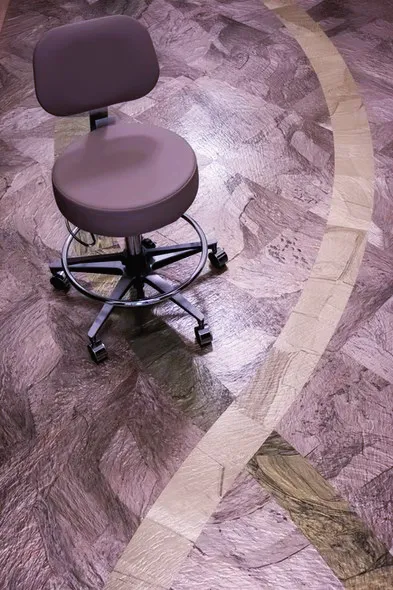
Commercial LVT can interpret limestone, marble, concrete, terrazzo, and other architectural surfaces in a resilient format.
These products can be especially useful when designers want continuity across an interior while balancing aesthetics, maintenance, budget, installation considerations, and the functional requirements of different spaces.
Tile dimensions and pattern layout matter here.
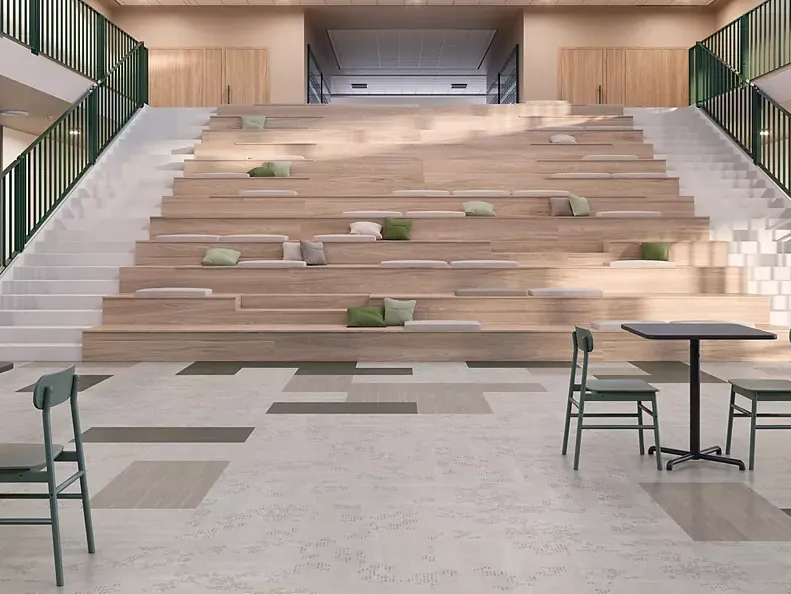
Large-format tiles can create an entirely different visual rhythm than traditional resilient tile, while coordinated colors and visuals can help connect corridors, gathering spaces, offices, classrooms, and other areas throughout a facility.
Abstract, Textile & Graphic Luxury Vinyl Tile
When the floor doesn't need to imitate anything.
Some of the most interesting LVT isn't designed to look like wood or stone at all.
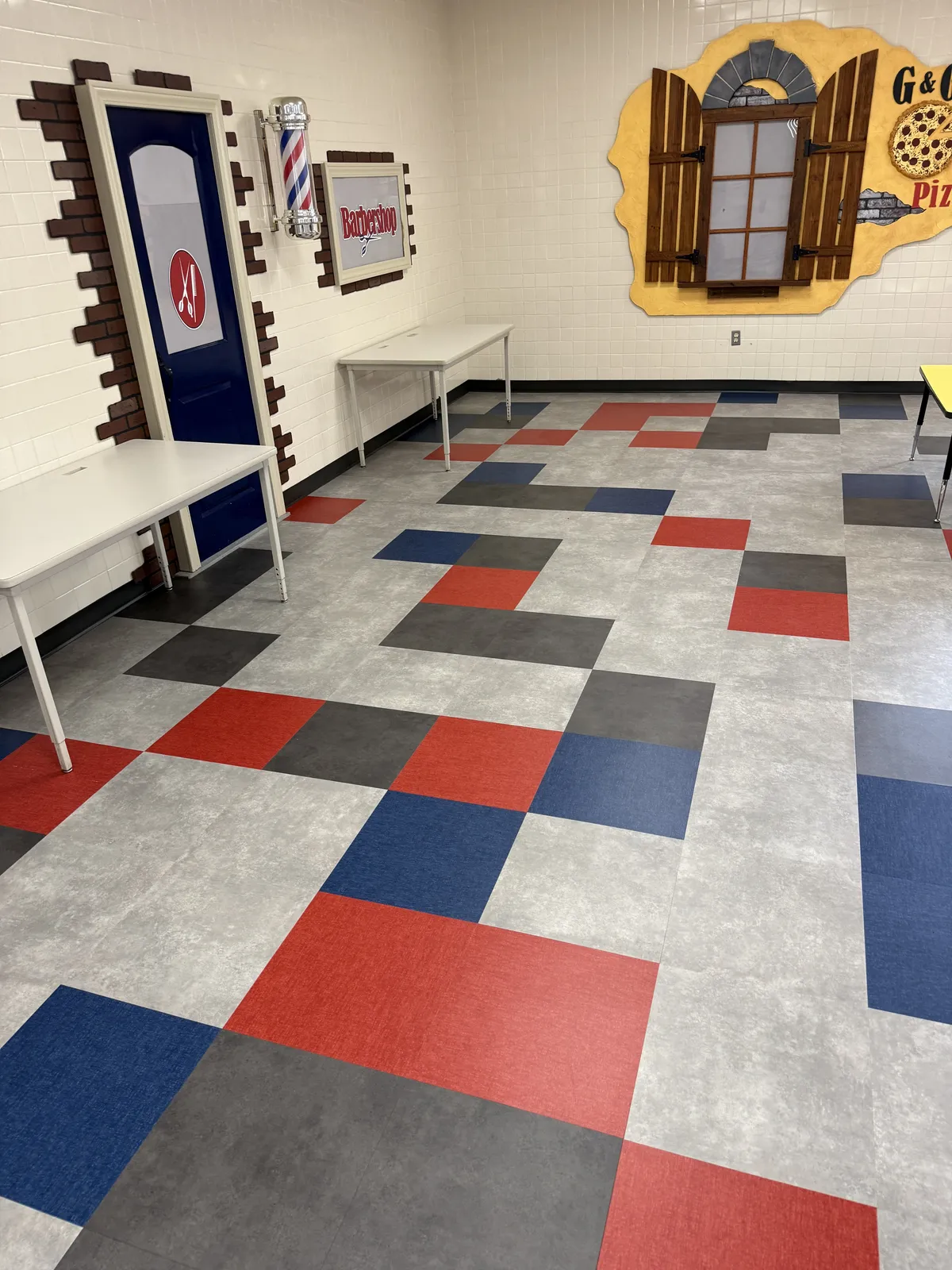
Textile-inspired textures, striations, metallics, layered colors, geometric patterns, and abstract visuals allow the flooring to become part of the interior design language.
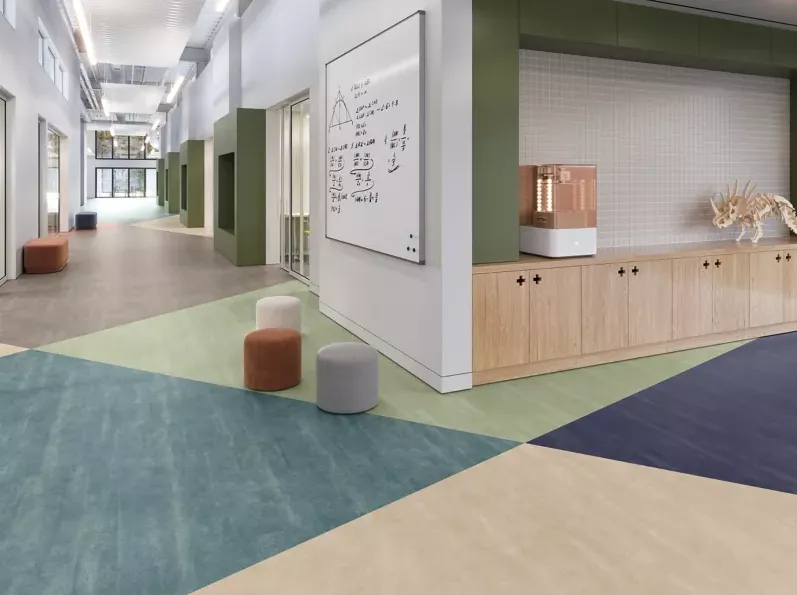
These collections can also coordinate with carpet tile and other resilient products, giving designers opportunities to create transitions, pathways, zones, and visual hierarchy across a project.
For architects and designers, this is where LVT moves beyond imitation and becomes a design material in its own right.
Product Spotlight
Mohawk Group's Hot & Heavy II: One Collection. Different Thicknesses.
Mohawk Group's Hot & Heavy II:
One Collection. Different Thicknesses. Unique Installation Strategies.
Mohawk Group's Hot & Heavy II is a great example of why overall LVT thickness shouldn't be confused with wear-layer thickness - or assumed to be a simple measure of quality.
The collection offers commercial LVT in both 2.5 mm and 5.0 mm constructions, with both featuring a 20-mil commercial wear layer and Mohawk Group's M-Force™ Ultra finish technology.
So why choose one thickness over the other?
Because they're designed to solve different project conditions.
2.5 mm | Glue-Down
The 2.5 mm option provides a traditional lower-profile commercial LVT construction for direct-bond applications.
It's a practical choice when the project calls for glue-down LVT, when finished elevations favor a thinner resilient product, or when budget and installation strategy make the 2.5 mm construction the better fit.
5.0 mm | Loose Lay
The 5.0 mm option uses a thicker construction and a loose-lay installation system.
Just as importantly, Mohawk Group designed its 5.0 mm Hot & Heavy II products to coordinate with its carpet tile products, allowing hard and soft surfaces to meet at compatible elevations without relying on conventional transition strips.
For corporate, education, healthcare, and other interiors where carpet tile and LVT frequently flow from one space into another, that can give architects and designers considerably more freedom to create intentional transitions between materials.
Same Wear Layer. Different Purpose.
That's what makes Hot & Heavy II such a useful example.
2.5 mm doesn't mean less commercial.
5.0 mm doesn't simply mean more durable.
Both constructions use a 20-mil commercial wear layer. The difference in overall thickness supports different installation and flooring-design strategies.
And that's exactly why CFS looks beyond a single number when evaluating commercial LVT.
Hot & Heavy II also offers a broad palette of wood, stone, terrazzo, and abstract visuals, giving project teams opportunities to coordinate performance requirements with the design of the space.
The right question isn't always, “Which product is thicker?”
It's, “Which construction makes more sense for this project?”
Commercial Luxury Vinyl Manufacturers
More Choices Are Valuable When You Know How to Compare Them.
CFS works with leading commercial resilient flooring manufacturers offering extensive LVT and LVP portfolios.
Our commercial Luxury Vinyl resources include manufacturers such as Mohawk Group, Interface, Tarkett, Milliken, Mannington, Shaw Contract and more. But access to products is only part of the equation.
These manufacturers offer extraordinary choices in visuals, formats, constructions, thicknesses, wear layers, finishes, backing technologies, and installation systems.
Our role isn't simply to show you all of them. It's to help narrow those choices to the products that make sense for your project.
Popular Luxury Vinyl Manufacturers We Partner With:







Understanding Wear Layers
6 mil. 12 mil. 20 mil. 30 mil. 40 mil. What does that even mean?
Each number tells a different story.
The wear layer is the transparent protective layer positioned over the printed visual of an LVT product.
Its thickness is typically expressed in mils.
And here's an important clarification:
A mil is not a millimeter.
One mil equals one-thousandth of an inch.
So:
6 mil = .006"
12 mil = .012"
20 mil = .020"
30 mil = .030"
40 mil = .040"
Generally, increasing wear-layer thickness provides more material above the decorative visual to withstand use. But wear-layer thickness is only one part of the performance equation.
The composition of the wear layer, factory-applied finish, product construction, testing, maintenance requirements, and manufacturer's intended application should also be considered.
6 mil
Products with lighter wear layers are generally positioned toward lighter-duty applications.
They may provide an economical solution where traffic and performance expectations are limited, but they should not automatically be substituted into demanding commercial environments simply because the visual or initial price is attractive.
Application matters.
We most commonly see 6 mil luxury vinyl in residential environments. They generally are not practical for commercial spaces or commercially managed, multi-family needs.
12 mil
A 12-mil product can provide another value-oriented option for appropriate commercial applications.
The important distinction is that “commercial” describes a broad spectrum of environments.
A private office and a heavily traveled school corridor are both commercial spaces - but they don't necessarily place the same demands on flooring.
CFS evaluates the actual application before recommending a product based solely on its wear-layer number.
20 mil
20 mil is one of the most common reference points in commercial LVT.
A wide range of major commercial flooring manufacturers offer 20-mil products for commercial environments.
That doesn't mean every 20-mil product is identical. Finish technology, construction, dimensional stability, installation requirements, maintenance, warranty terms, and manufacturer recommendations still vary significantly.
Think of the wear layer as an important specification - not the entire specification.
30 & 40 mil
Heavier wear-layer constructions are available for applications and product platforms where manufacturers have engineered additional wear-layer thickness into the system.
These products can be worth evaluating for demanding environments, but another common misconception deserves attention:
More wear layer isn't automatically better for every project.
A project team should evaluate whether the additional construction provides meaningful value for the intended environment rather than selecting the largest number on the data sheet.
The objective is not to overspecify or underspecify.
It's to specify intelligently.
Thickness vs. Wear Layer
Two Measurements. Two Different Jobs.
Here's the practical takeaway:
A 5 mm / 20 mil product is not simply “better” than a 2.5 mm / 20 mil product.
Both may have the same nominal wear-layer thickness while their overall constructions serve different purposes.
Likewise, a thicker overall plank can have a thinner wear layer than a lower-profile commercial product.
That's why comparing LVT by a single number can lead to the wrong conclusion.
CFS looks at the complete flooring system.
Other Services
Explore more solutions

Preconstruction
The best flooring projects begin long before materials arrive on-site. Through budgeting, estimating, design assistance, product selection, and constructability reviews, our team helps owners, architects, designers, and contractors make informed decisions early in the process. By identifying potential challenges before construction begins, we help reduce uncertainty, protect project budgets, and create a smoother path from concept to completion.

Project Management
A successful flooring project requires more than quality installation—it requires coordination. Our project management team works closely with owners, general contractors, design professionals, manufacturers, and field crews to manage schedules, logistics, material procurement, and quality throughout every phase of construction. By staying engaged from planning through closeout, we help projects remain organized, efficient, and ready for occupancy.
Technical Solutions
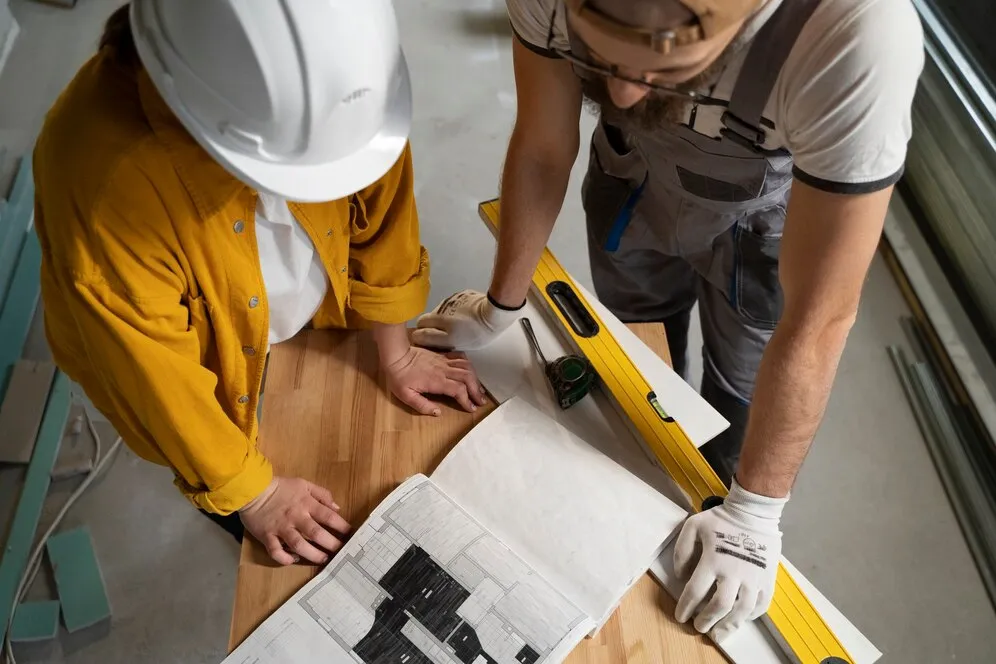
Not every flooring challenge can be solved with a new finish material. Moisture, uneven substrates, damaged concrete, and existing floor conditions all affect long-term performance. Our technical solutions focus on identifying the root cause of these issues and implementing proven remediation systems that create a stable foundation for every installation. It's an approach built on experience, manufacturer partnerships, and a commitment to getting it right the first time.
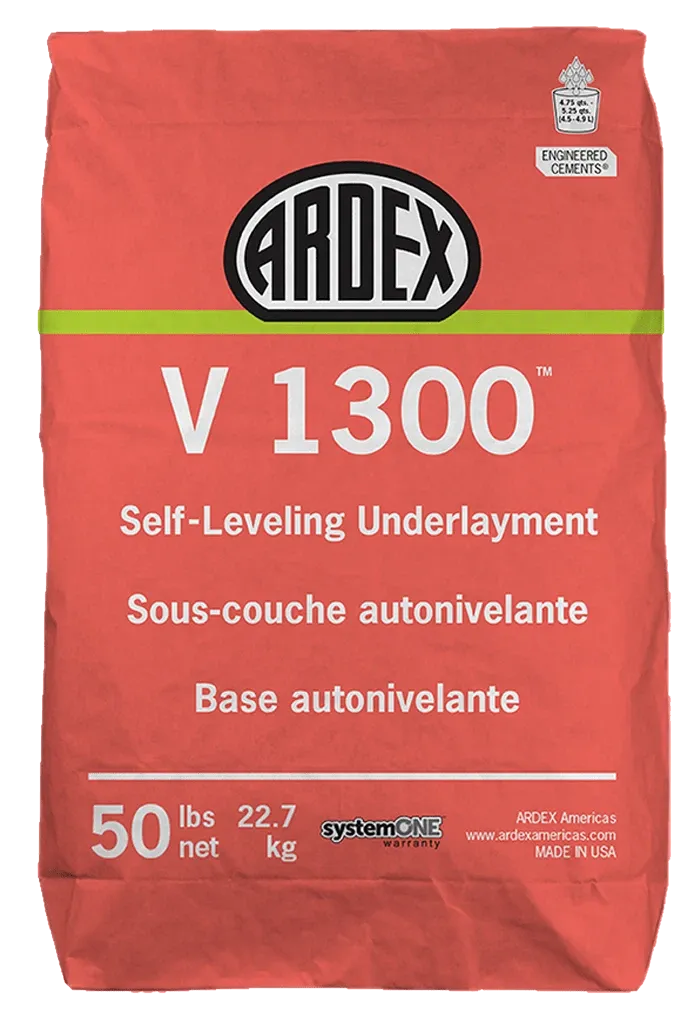
Every Underlayment Product Serves a Unique Purpose
Interested in learning what the right solution is for your toughest substrate condition, we are here to help.
Every day, we help our customers engineer the right system for their needs, from budget to speed to performance, we got you covered!

BUIILDING LEADERS.
INSTALLING TRUST.
DELIVERING RESULTS.
Quick links
Services
© Commercial Flooring Services. 2026. All Rights Reserved.